Noise cancelling earbuds are the easiest thing in audio to buy wrong. You read ten reviews, they contradict each other, you go back down the rabbit hole, and you end up ordering a pair because the case looked good in a photo. I have done that. The way out is not more reading. It is a test order.
Here is the part nobody tells you: the spec sheet cannot answer the four questions that decide whether you keep a pair. How long does the battery actually run at the volume you listen at? Does each earbud work on its own? How quiet is the quietest setting? Do they stay in during a walk without hurting your ear canals?
Get those four answers and everything else, the codec, the branding, the marketing copy, stops mattering. Skip them and you will be back here in six months, annoyed, with a drawer full of pairs that were fine on paper and irritating in your ears.
Why you should trust me
I do live sound and recording cleanup work around Nashville, which means my workday runs through a serious pair of over-ears that never leaves the desk. Everything else in my life, the walks, the gym, the grocery run, the commute, runs on cheap earbuds. That is the tier I actually know, because it is the tier I keep buying.
I have bought the same budget pair three times now, lost one after a year and another after a year and seven months, and I would buy a fourth without thinking about it. Along the way I have run the same checklist on every pair that came through my drawer, and I have said "these are fine" about very few of them.
One more thing that shapes every recommendation here: my ear canals are small and sore easily. Almost every pair hurts eventually. So when I say a pair is comfortable, I mean it survived my ears, not a reviewer's. And I am not sponsored. I buy what I write about, and I say avoid when a pair deserves it.
How I picked the two pairs in this guide
This is not a list of every earbud on Amazon. It is two pairs that answer the four questions differently, one at the budget end and one at the premium end, so you can see what the money buys and what it does not.
The criteria, in the order I check them:
- Single-charge battery. Not the number in the product name. That number is almost always the buds plus several case recharges, and I refuse to call that playtime.
- Independent bud use. One bud out, other ear listening, phone in pocket. I did not know I needed this until I had it, and now I will not give it up.
- The volume floor. The quietest setting has to be quiet enough for a podcast in bed. If the minimum is loud enough to blast my eardrums, the pair is out.
- Fit and comfort. Ear tips that seal without pressure, and buds that survive a walk without needing a shove back in every block.
- Honest noise cancelling. I want to know what the ANC kills and what it does not, because at the budget end the word on the box and the effect in your ears are two different things.
- No magic-case math. A case recharges buds. It does not extend battery life into another dimension, and the marketing language around it drives me up a wall.
Everything I cite below comes from the product listings themselves. The drain test that decides it is yours, on your phone, at your volume.
The two pairs worth starting with
One budget option and one premium option, judged against the same checklist.
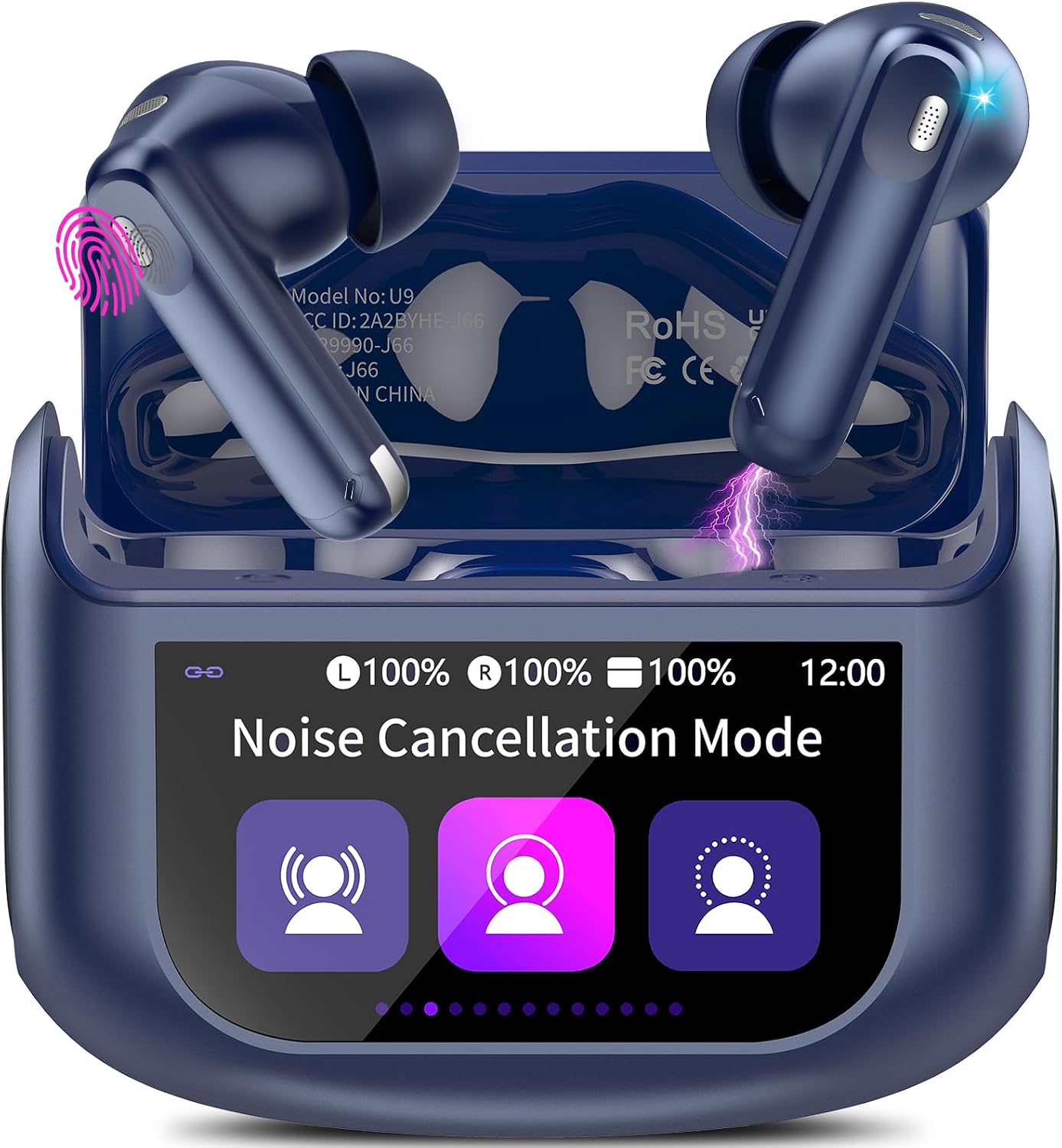
Budget pick: Thunelec Active Noise Cancelling Ear Buds 48H Wireless Earbuds,Blue
 Visit on Amazon →
This is the pair I would hand to someone who wants to spend as little as possible and still get active noise cancelling in the name. Check current Amazon price before you decide anything, because the budget tier moves around and the math changes fast when it does.
The first thing to interrogate is the 48H in the product name. That is almost certainly the buds plus the case recharges, which is the magic-case math I complain about constantly. What you actually need to know is how long the buds run on one charge with ANC on, at a normal volume, and that is a number you have to find with your own drain test. Do it on day two, not day twenty-five, while you can still return them.
The ANC claim is worth calibrating too. At this price, expect a reduction rather than silence. Think of it as taking the edge off a bus engine or a fan hum. Do not expect a plane cabin to go quiet, because that is not what budget ANC does, and a pair that promises it and fails is worse than a pair that promises less.
Flaws but not dealbreakers: Budget ANC always leaves some low-frequency rumble behind, and the fit depends entirely on whether the included tips seal in your ears. Small ear canals should plan on a tip swap.
Anyone who wants noise cancelling for chores, walks, and the gym without spending real money should start here.
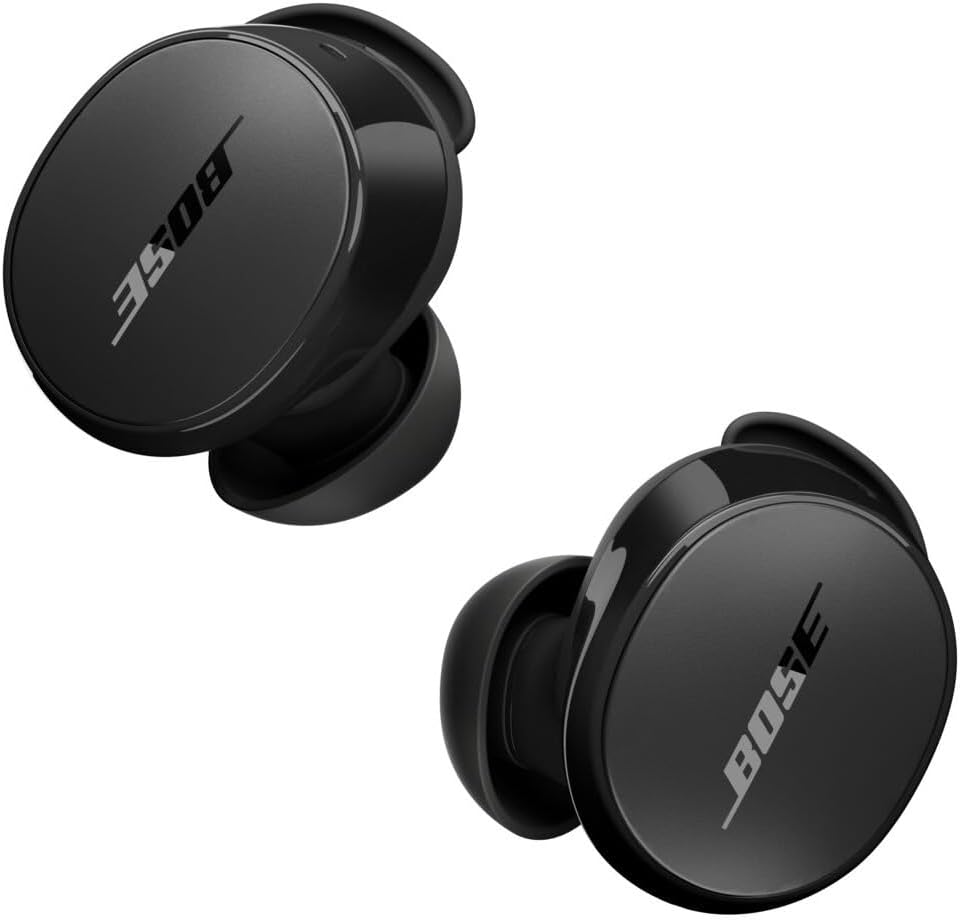
Upgrade pick: Bose QuietComfort Earbuds - True Wireless Bluetooth Earbuds with Active Noise Cancellation and Mic, USB-C Charging, IPX4 Rating, Up to 8.5 Hours of Playtime, Black
 Visit on Amazon →
Check current Amazon price, and then read the listing for what it actually promises: active noise cancellation, a mic for calls, USB-C charging, an IPX4 rating, and up to 8.5 hours of playtime. That playtime figure is the one I care about most, because it is listed as a single-charge number rather than a total with case recharges folded in. A pair that runs a full workday and a commute on one charge is a different product category than one that runs two hours.
The IPX4 rating is sweat and light rain resistance, not swim-proof, so treat it as gym and walking weather protection rather than something you can rinse under a tap. USB-C charging matters more than people admit, because it means one cable for your phone and your earbuds instead of a drawer of adapters. I lived with a drawer of dead 3.5mm adapters for years before the phone stopped working with connectors entirely. I am not going back.
ANC is the whole reason this pair sits at the top of the guide. It is the tier where noise cancelling is a system rather than a checkbox, and where a mic that holds up on a call is part of the package instead of an afterthought.
Flaws but not dealbreakers: This is a real purchase, not a stocking stuffer, and the case is a case. If you want the price of two coffees, look at the budget pick above.
Anyone who commutes on transit, works in an open office, or takes calls from the street and wants the noise to actually go away should look here first.
The test order: how to check a pair before the return window closes
Do these in order. Each step takes minutes, and each one can save you from a pair you will resent by week three.
Step one: Battery, at your volume, with ANC on. Charge to full, set the volume where you actually listen, turn noise cancelling on, and run a podcast or an album until the buds die. Write down the time. Not the box number, not the listing number. Yours. If a pair cannot clear a normal commute plus a workday, you have your answer, and you got it while returns were still open.
Step two: The volume floor. This is the test almost nobody runs. Drop the volume to its lowest setting in a quiet room. If you can still hear it clearly across the room, or if the minimum is loud enough to hurt, the pair is a dealbreaker for bedtime listening and for anyone with sensitive ears. Some pairs simply do not go quiet enough, and no amount of good sound fixes that.
Step three: One bud at a time. Take the left bud out, leave the right in, and walk away from the case with your phone in your pocket. Then swap. Both buds should work solo, and neither should drop out when you turn your head or put your phone in a back pocket. Independent use is the feature I did not know I needed until I had it, and now I check it before anything else.
Step four: The two-week fit test. This one cannot be rushed. Wear them on walks, at the gym, doing dishes, on a call. Two weeks is enough time for the small aches to show up. If your ear canals start to feel bruised or itchy, try every tip size and material you have before you give up, and if none of them work, return the pair. Fit beats frequency response. If it hurts, nothing else about it matters.
Step five: Power-on sounds and controls. Turn them on and listen to what greets you. A soft chime is fine. A loud "POWER ON!" announcement at full volume is a dealbreaker, especially if you listen at low volume, because the announcement is always louder than your music. While you are there, test the touch controls. If taps do not register reliably, you will grab your phone every time anyway, and the controls are decoration.
Step six: The ANC reality check. Stand next to a running fan, a bus, or a noisy street. Notice what disappears and what does not. Good ANC kills steady low-frequency drone. It does not kill a dog barking or a person talking next to you, and any pair that claims otherwise is selling you a story. Knowing the difference tells you whether the pair is worth the money for your commute.
Step seven: The call test. Call someone from a noisy street and ask them, honestly, how you sounded. A mic that works in a quiet room and a mic that works at a crosswalk are not the same mic.
Step eight: Case math. Charge the case, run the buds down, and count how many recharges you actually get. Compare that to the number in the product name. This is the step where the magic-case language falls apart, and it is also the step that tells you whether the case will hold a charge in a bag for a month without babysitting.
What I left out and why
Wired headphones still sound better than wireless, and I will hold that opinion until I am dead. But the phone moved on, the adapters die on you, and the practical reality is wireless. So I am not going to pretend a wired guide solves a wireless problem.
Open-ear buds, the kind that sit outside the canal, were my compromise for years because they stop the ear pain. They also cost you sound quality, and I got tired of pretending otherwise. If fit is the only thing that matters to you, they are worth a look, but they are not noise cancelling earbuds and should not be judged as such.
Generic no-name pairs at the very bottom of the price range are the enemy. Lag, dropouts, battery that dies after a couple of hours, and a minimum volume loud enough to hurt. The few dollars you save are not worth the two weeks you spend annoyed.
And the serious over-ears stay at my desk. They are the reference pair for work, not for a walk.
What this all costs
There are two honest tiers here. The budget pair keeps you in the game for very little, and you accept that the noise cancelling is a reduction rather than a wall. The premium pair costs real money, and in exchange you get a playtime number you can plan a day around, a mic that works on a call, and noise cancelling that does what the word promises. Check current Amazon price on both before you commit, because the gap between the tiers moves with sales.
The cost-per-day math is the part people skip. A pair you keep for two years costs you the price divided by 730, and a pair you lose in four months costs you the same money divided by 120. I have lost two pairs in my life and bought the same model three times, so I know exactly which side of that math I land on. The cheaper pair is only cheaper if it survives your ears and your pockets.
Then add the hidden line item nobody budgets for: ear tips. If your canals are small, you will buy tips. Factor that in and the budget tier gets a little less budget, which is still fine, because a comfortable cheap pair beats an uncomfortable expensive one every single day.
That is the job. Pick the tier, run the eight steps in order, and let the return window do the rest.