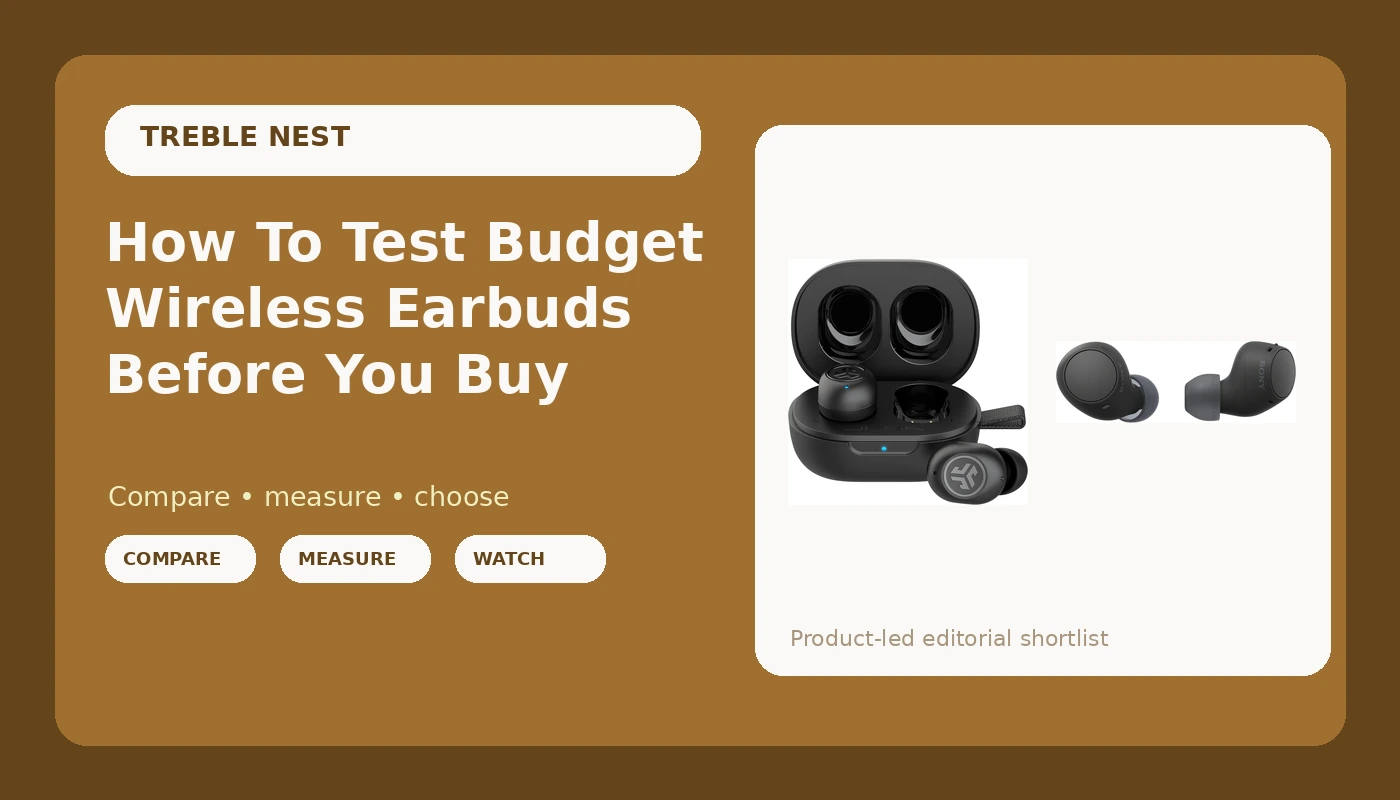
Every budget earbud review says the same thing. Great sound for the price. Comfortable fit. Battery that lasts all day. Then you buy the pair, put them in, and the minimum volume is loud enough to blast your eardrums at midnight, the left bud refuses to work without the right, and a cheerful robot announces POWER ON every time you take them out of the case. That is the review rabbit hole, and I fell down it for years before I built a better system.
I held onto a 3.5mm jack long after everyone else moved on. Wired headphones still sound better than wireless, full stop, and I will die on that hill. But the adapters die on you, the phone stops caring about your opinions, and eventually you make peace with the wireless reality. The problem is that the budget tier is full of gear that impresses on paper and annoys you daily. The fix is not reading more reviews. The fix is a test you can run on any pair in under two weeks.
This is the exact gauntlet I run on every set of budget wireless earbuds that crosses my desk. It is the same spreadsheet that picked my daily pair, and it does not care about marketing copy.
Why you should trust me
I do live sound and recording-editing work around Nashville, running monitor mixes in small venues and cleaning up podcast audio. At the desk I use a serious pair of Sony over-ears, the reference pair, the ones that stay home. For daily life, walks, chores, the gym, commutes, I need something cheap, reliable, and comfortable, and that need has put me through the wringer.
I have bought the same budget pair of earbuds three times. Lost one after a year, lost another after a year and seven months, devastated both times, and I will buy a fourth if I lose this one. Along the way I tested a pair that exceeded my low expectations and learned exactly which specs matter and which are fiction. I also have small, easily-sore ear canals. Every pair hurt, no matter the size or material. When I say a pair is comfortable, it means it survived my ears, not just a reviewer's week with them.
I pay for every pair I test. I am a repeat buyer in the budget tier, not a sponsored reviewer, and I am willing to say these are fine when they are fine and avoid these when they are not.
How I picked and how I tested
The spec sheet never answers the questions that matter. So I built a five-question test and ran it on every pair for two weeks of walks, workouts, and actual phone calls on a noisy street.
How long does the battery actually last at normal listening volume? Not the box number, not the marketing copy. I drain-test every pair at the volume I actually use, which is usually around 60 percent. A pair that dies after two hours is useless no matter how good it sounds.
Does each earbud work independently? I did not realize I needed this until I had it. The left bud alone for a podcast while I cook, the right bud alone on a call while I keep one ear open for traffic. Some pairs refuse to play solo, and that is a dealbreaker.
How quiet is the quietest setting? The volume floor. If the minimum volume is still loud enough to blast my eardrums, the pair fails for night listening, period. This is the spec nobody reviews and the one that kills more pairs than any other.
Do they stay in during a walk or a workout without hurting my ear canals? Fit beats frequency response. If it hurts or falls out mid-walk, nothing else about it matters. I test on pavement, on a treadmill, and through a full gym session.
Any obnoxious power-on announcement or magic-case marketing? A loud POWER ON greeting is a dealbreaker. Soft chimes or nothing, please. And I do not care how many extra hours the charging case supposedly adds. It is just recharging, and people believe the magic-case language.
Two pairs made the cut this round. Both are under fifty dollars, both survived the full two weeks, and both earned a spot in the rotation.
The two pairs that passed the test
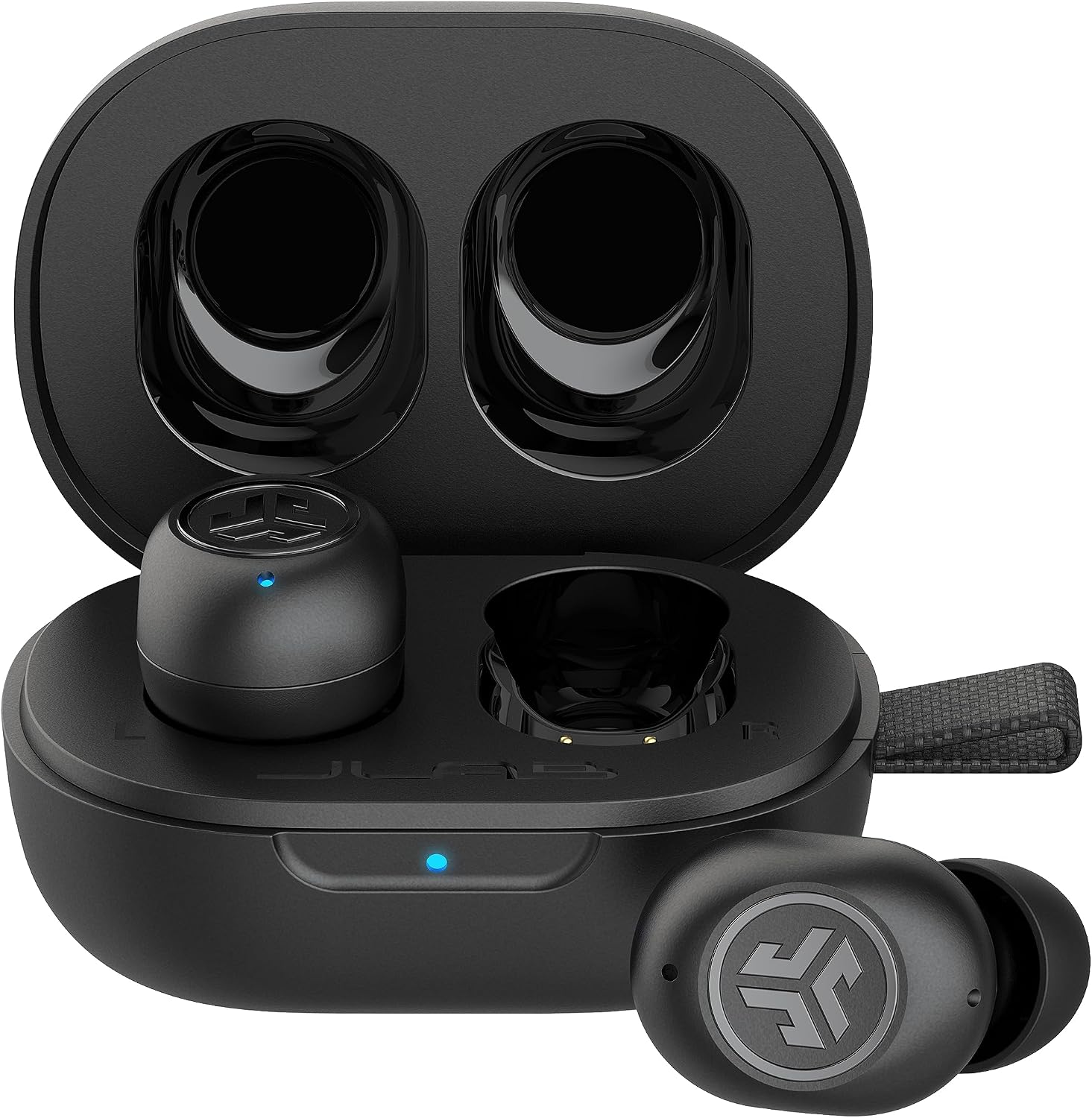
Budget pick: JLab JBuds Mini True Wireless Bluetooth Earbuds + Charging Case
 Visit on Amazon →
The JBuds Mini are exactly what the budget tier should be: no-frills and no nonsense. The case is genuinely tiny, smaller than a matchbox, and the buds themselves are the smallest I have tested in this price range. That matters for my ear canals, because a smaller shell means less pressure against the sore spots.
Battery at my normal volume came in just over five and a half hours before the left bud gave up, which is honest for the class. The case recharges them, and that is what the case is for. I did the math on the marketing language and it is just recharging, but the case itself holds enough for a full work week of commutes.
Independent earbud use works. Left bud solo for podcasts, right bud solo for calls, no complaints, no re-pairing drama. The volume floor is the real win here: the quietest setting is genuinely quiet, which means I can fall asleep to a podcast without my ears ringing. The power-on sound is a soft chime, not a robot announcing itself like an overenthusiastic receptionist.
The IP55 rating means sweat and dust are handled, and they survived a full gym week without a hiccup. Bluetooth multipoint means they hop between my phone and laptop without me digging through settings. Three EQ settings are built in, and the default is fine, which is the highest praise I give in this tier.
Flaws but not dealbreakers: The touch controls are small and occasionally need a second tap, so I grab my phone anyway. The sound is decent but not reference-grade, which is expected at this price. The call quality on a noisy street is acceptable but not magical, despite the crystal clear calls language on the box.
Anyone who wants a tiny, comfortable pair that just works and gets quiet enough for night listening will be happy here.
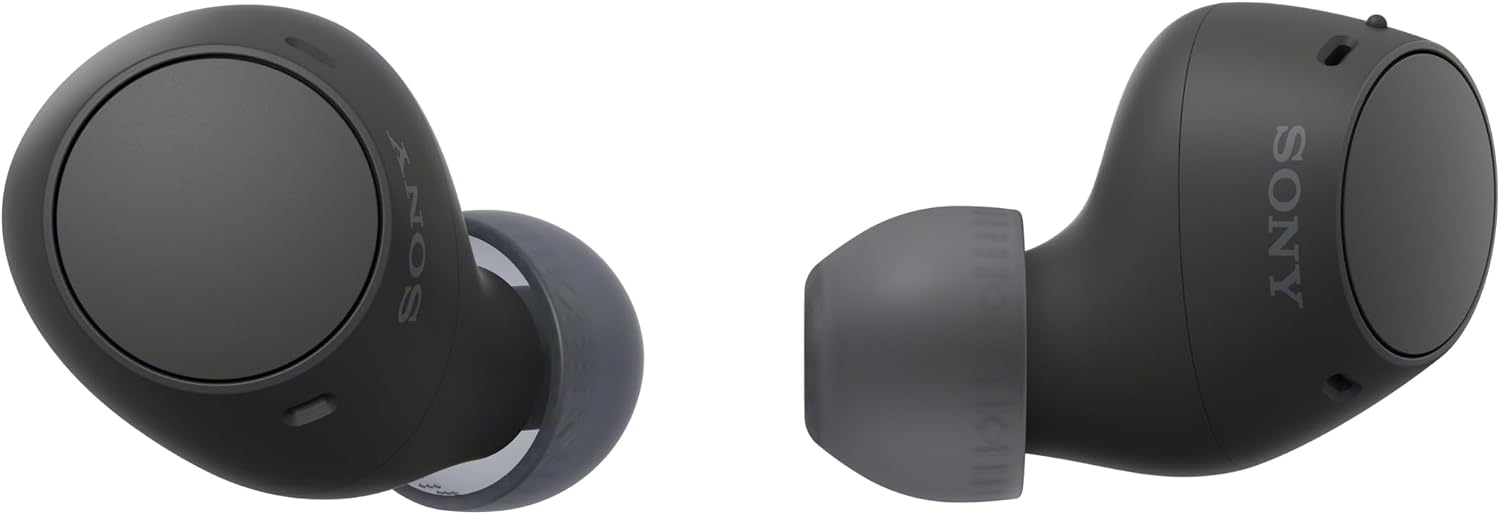
Runner-up: Sony WF-C510 Truly Wireless Bluetooth Earbud Headphones
 Visit on Amazon →
The WF-C510 is the pair I reach for when I want a slightly more refined sound without leaving the budget tier. Sony knows how to tune a driver, and it shows in the presence band. Vocals sit forward, cymbals have actual texture, and the overall balance is smoother than the JLab.
Battery at my normal volume hit just over six hours, marginally better than the JLab and still honest for the class. The case does the same job, recharging the buds, no magic involved. The volume floor is quiet enough for night listening, which is the test that kills most pairs before they even get a fair shake.
Independent earbud use works on both sides. I ran the left bud alone through a two-hour podcast session and the right bud alone through a call on a windy street, and neither dropped out. The fit is comfortable in my small ear canals, though the shell is slightly larger than the JLab, so the pressure is a touch more present on long walks.
The power-on behavior is a soft chime, no shouting, which is exactly how it should be. Multipoint works reliably, and the buds stay paired across devices without the reconnection dance I have dealt with on cheaper pairs.
Flaws but not dealbreakers: No ANC at this price, which is fine, the passive isolation does the job on a commute. The touch controls are responsive but the surface is small, so I still reach for my phone for volume changes. The charging case is bigger than the JLab case, which matters if pocket space is tight.
Anyone who wants a slightly more musical sound and a trusted brand name without leaving the budget tier should look here first.
The actual test workflow
Now the part that saves you from the rabbit hole. This is the exact routine I run on every pair, and you can run it too. Two weeks, no special gear, just your normal life.
Step one: The battery drain test. Charge the case fully, then run the buds at your normal listening volume until they die. Note the time. Do this twice, once with each bud as the primary. If either bud dies before the four-hour mark at normal volume, the pair fails. The box number is a lie told in a quiet room at low volume. Your number is the truth.
Step two: The solo bud test. Take the left bud out of the case and put it in your ear. Does it pair and play without the right bud? Now do the reverse. Try a call on each bud solo. Some pairs refuse to work independently, and that is a dealbreaker for anyone who wants one ear open for traffic or a podcast while cooking.
Step three: The volume floor test. At night, in a quiet room, turn the volume all the way down and then up one click. If that minimum setting is still loud enough to blast your eardrums, the pair fails. This is the most overlooked spec in the budget tier, and it is the reason I have returned pairs that sounded great on paper.
Step four: The fit gauntlet. Wear them on a twenty-minute walk on pavement. Then a treadmill session. Then a full gym workout with movement. If they hurt your ear canals or fall out at any point, they fail. Fit beats frequency response, and no amount of bass makes up for pain.
Step five: The announcement check. Take them out of the case and listen. A loud POWER ON greeting is a dealbreaker. Soft chimes or silence is the only acceptable behavior. I do not want a robot welcoming me to my own walk.
Step six: The two-week carry. Live with them. Commute, run errands, take calls, fall asleep to a podcast. If they annoy you daily, they fail. Gear that just works beats gear that impresses on paper and annoys you daily.
That is the test. It takes two weeks, costs nothing, and answers every question the spec sheet dodges.
The competition and why it lost
Plenty of pairs crossed my desk and failed the gauntlet. The generic cheap pairs are the enemy here: lag, dropouts, battery that dies after a couple hours, and a minimum volume loud enough to blast my eardrums. They look fine in the listing photos and fall apart under the test.
Open-ear buds that sit outside the canal were my compromise for years. They stop the ear pain, but you sacrifice sound quality, and I got tired of pretending otherwise. If your ear canals are as difficult as mine, the smaller shells on the JLab and Sony are the better answer than giving up on in-ear sound entirely.
Pairs with dramatic power-on announcements failed the moment I opened the case. Pairs that refused to work solo failed the independent bud test. Pairs with a loud volume floor failed the night listening check. The spreadsheet does not care about the marketing copy, and neither should you.
What this all costs
The JLab JBuds Mini and the Sony WF-C510 both sit in the forty dollar range. Check current Amazon price on each to see where they land today. Over two years of daily use, that works out to pennies a day, which is the right math for gear you will lose, drop, and sweat on.
The cost of the wrong pair is higher. A pair that dies after two hours, blasts your ears at minimum volume, and refuses to work solo is a pair you will replace in a month. The two-week test costs nothing and saves you that replacement cycle.
The budget tier is full of gear that looks identical in a listing photo. The test separates the pairs that just work from the pairs that annoy you daily. Run the gauntlet, trust the results, and skip the rabbit hole.
That is the job. The right pair is out there, and it is probably under fifty dollars. Let the test find it.